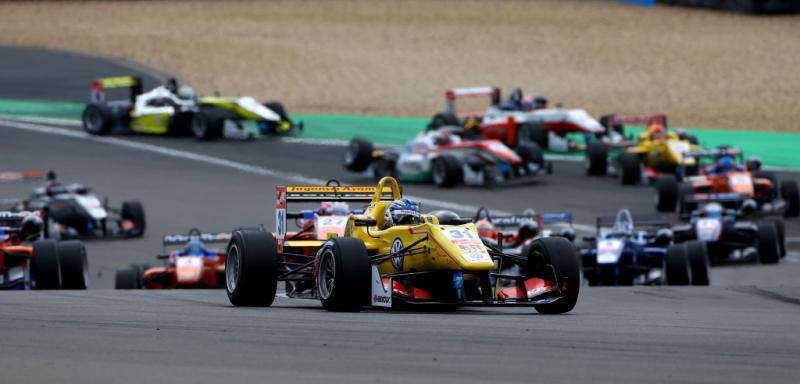
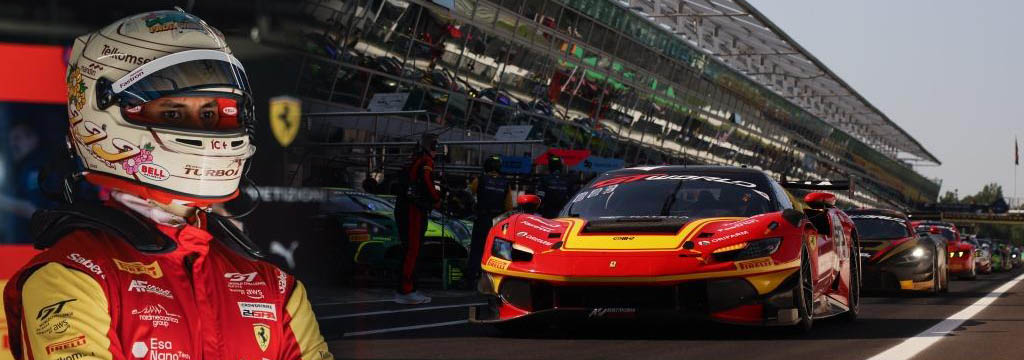
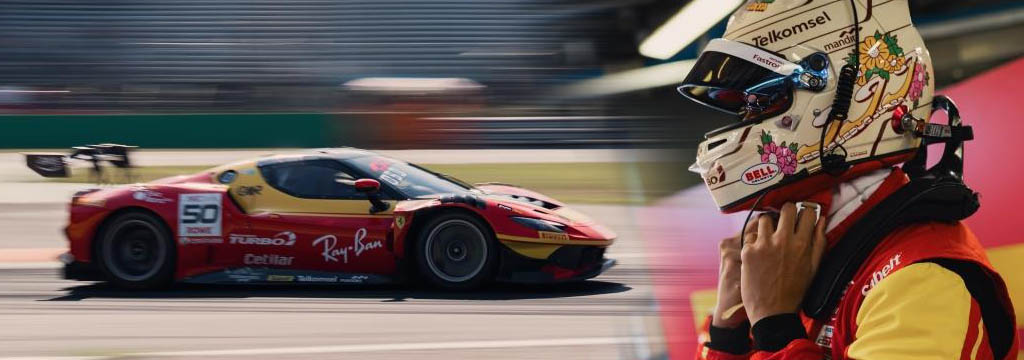
Aragon, Spain, 16th April 2015 - Indonesia’s Sean Gelael begins his Formula Renault 3.5 Series season at Motorland Aragon in Spain with two races on the 25th and 26th April.
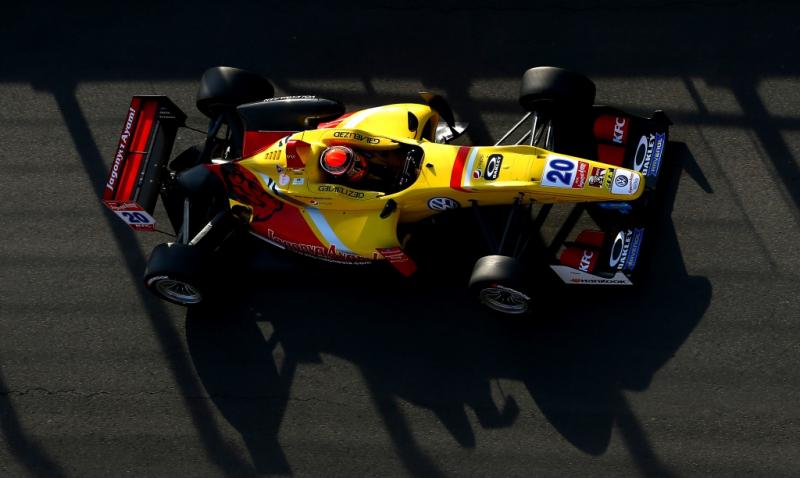
After two years in the FIA Formula 3 European Championship, Gelael has stepped up with the Jagonya Ayam with Carlin team, and there are a lot of new things to get used to, some of which are very similar to Formula 1. Among these are the power – much closer to F1 than F3 – as well as the increased level of competition. Then there is the DRS, the system that changes the angle of the rear wing to aid overtaking. But perhaps most obvious are the pit stops.
In Formula 3, a pit stop is only ever bad news, as it means you have some damage or a mechanical failure that needs sorting out. In Formula Renault 3.5, it is compulsory to make a pit stop in the second race of the weekend to change at least two tyres. First of all, this means that the Jagonya Ayam with Carlin team must be operating to the best of its capacity to minimise the delay, and secondly it can be used to strategic benefit: if, for example, Sean is stuck behind someone on the track, an early pit stop could get him into clear air so he can be ahead of his rival when he makes his stop.
The Carlin team did not compete in Formula Renault 3.5 in 2014, but team manager Ricky Taylor, fresh from pit-stop practice at the team’s base in Farnham in England, says: “We are blowing away the cobwebs! We take our pit stops very seriously, because there are positions to be gained. Five years ago we won the championship because of one quick pit stop. OK, we did not compete last year, but doing pit stops is like riding a bicycle – it is second nature to us.”
The team analyses its pit-stop practice to try to get the best possible performance for Gelael and his team-mate Tom Dillmann, with a target time of three seconds for a good stop. “On our boom that we have across the centre of the car, which carries airlines and wheelguns to the other side, we have two GoPro cameras,” says Taylor. “One faces forwards and the other faces backwards. We do about 25 stops and then have a bit of a break, and then 20 minutes later we will do another set. Then our data man will analyse all the stops, focusing on the critical parts and playing through the GoPro footage in slow motion. Because the stops happen so quickly, you never notice where you may be losing time, so to have this information is fantastic to find out where you need to improve.”
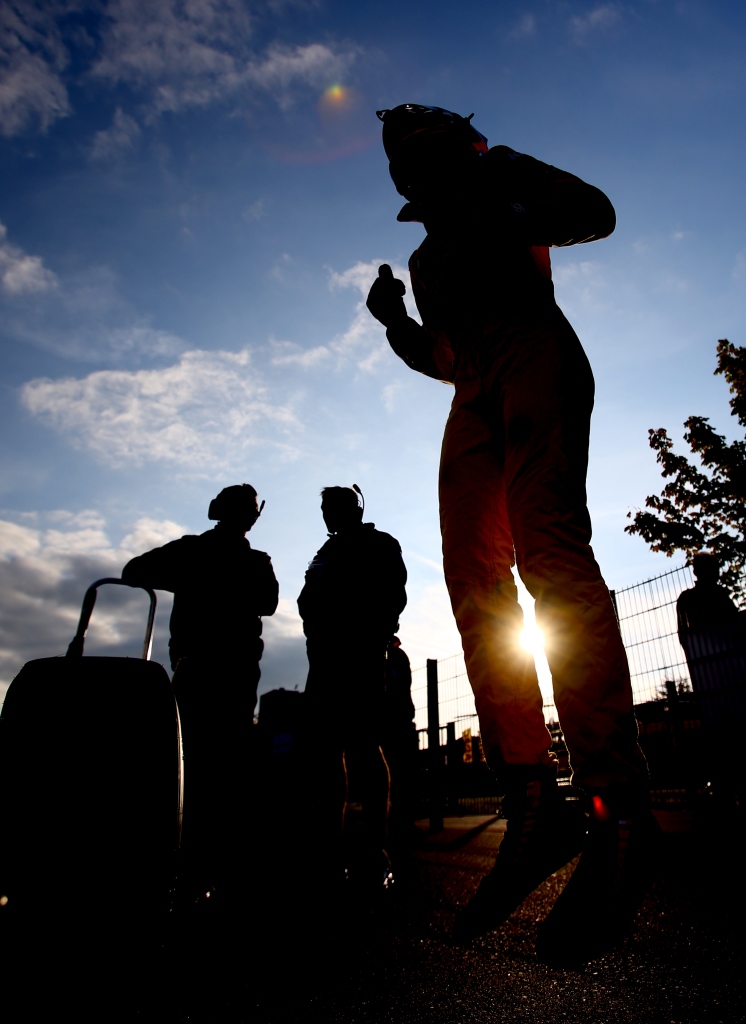
For that three-second pit stop, there will be seven people involved in the changing of the tyres, which is usually the two rears. One person operates the rear jack, and then on each side is one taking the old tyre off, one fitting the new, and one with a wheelgun. “This is pretty similar to what you have in Formula 1,” says Taylor.” But sometimes all four tyres may need to be changed, for instance if there is very heavy degradation or if the weather plays a part. “When this happens you have one person on each wheel,” says Taylor. “You have to undo the nut, pull the wheel off weighing 23kg, rotate yourself, pick up the new one weighing 23kg, while still holding the wheelgun in one hand. That puts a strain on the lower back!”
The Jagonya Ayam with Carlin team’s attention to detail means it is not just Gelael in the gym training for performance: his mechanics are too. “We have a gym at Carlin for pit-stop simulation,” says Taylor. “The jack man has loads to simulate the car weight, and there is a frame with standard weights like you would have on a weightlifting bar. You take one weight off, then the second and the third, and then put them back on again, before the jack guy releases his load.”
There is an eighth person involved in the pit stop: the mechanic who holds the lollipop to signal the driver where to stop on his marks and when to leave the pits. And of course there is a ninth: the driver himself.
“From now on, every time Sean makes a pit stop in free practice on Friday we will be practising a tyre change,” says Taylor. “And sometimes the driver will be instructed to lay rubber down, depending on the surface of the pit lane. But you would not believe how difficult the drivers find it to stop in the right place: they can hit a corner apex at high speed with incredible precision, but when they slow to the 60km/h speed limit in the pit lane their awareness completely goes! We work on this with every driver, because a driver who stops on his marks gives confidence to the guys around him, meaning they will be closer when the pit stop starts and saving him time.” (ms/arl)